Let’s be honest. The old playbook—land a stable job, climb the ladder, retire with a gold watch—feels, well, a bit like a relic. Today, more of us are weaving together portfolio careers, hopping between gigs, taking sabbaticals, or launching passion projects that ebb and flow. It’s liberating. It’s also financially terrifying if you try to use a traditional map for this entirely new terrain.
Financial planning for non-linear career paths isn’t about restriction; it’s about building a foundation flexible enough to support your unique rhythm. It’s the difference between feeling precarious and feeling empowered, no matter what your income looks like this month. Here’s how to build that foundation.
The Core Mindset Shift: From Linear Ladder to Financial Ecosystem
First, we need to ditch the scarcity panic. A fluctuating income isn’t a personal failure—it’s the data point your plan is built around. Think of your finances less as a rigid budget and more like a personal ecosystem. Some streams will dry up seasonally, others will flood. Your job is to manage the flow so the whole system thrives.
This means prioritizing resilience over rigid goals. It’s about creating buffers and options, not just hitting a specific savings number by 30. Honestly, it’s a more creative—and honestly, more engaging—way to interact with your money.
Practical Tactics for the Portfolio Careerist
1. Master the “Income Batching” System
When income arrives in chunks, you can’t treat it like a regular paycheck. Enter “Income Batching.” The moment a large payment hits, immediately split it into dedicated accounts. This isn’t budgeting, it’s allocation. A simple, effective method is the 50/30/20 split, but adapted for volatility.
| Account / Bucket | Percentage | Purpose & Mindset |
| Operating Expenses | ~50% | This covers your baseline monthly nut (rent, food, utilities). Calculate your annual needs, divide by 12, and fund this bucket first. |
| Tax & Security | ~30% | Set aside taxes immediately (25-30% is a safe start). The rest here is for emergency funds and insurance. Non-negotiable. |
| Growth & Freedom | ~20% | This is for investments, skill development, and “dream funding.” It’s what turns your work model from survival into strategy. |
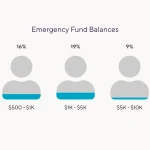
2. Build a “Deep & Wide” Emergency Fund
Forget the standard 3-6 months of expenses. For a non-linear career, you need a two-tiered safety net.
- The “Cash Cushion” (3-4 months): Liquid cash for immediate surprises—a client pays late, your laptop dies.
- The “Income Drought Fund” (3+ additional months): This is in a slightly less accessible account (like a high-yield savings). It’s for when work dries up for a season, allowing you to find the right next project, not the desperate one.
Together, they buy you peace of mind and the privilege of choice.
3. Demystify Retirement Savings (Yes, You Still Can)
This is the big anxiety point, right? Without a company 401(k), it feels out of reach. It’s not. You have powerful, accessible options.
- SEP IRA or Solo 401(k): Perfect for freelance income. You can contribute a significant percentage of your net earnings, often much more than a standard IRA.
- Roth IRA: A fantastic supplement. Contributions are made post-tax, but growth and withdrawals in retirement are tax-free. It’s a hedge against future tax rates.
- The Key Habit: Automate contributions from your “Growth & Freedom” bucket. Even small, consistent amounts compound dramatically. The goal is steady participation, not perfection.
Navigating the In-Between Phases and Cash Flow Gaps
So, what about the lean months? The strategy here is anticipation, not reaction.
- Cycle Your Living Expenses: During high-income months, live on last month’s income. It creates a natural one-month buffer that smooths everything out.
- Diversify Income Streams Before You Need To: That small retainer, a micro-consulting package, a digital product—these aren’t just income, they’re stability anchors. They turn the “feast or famine” cycle into “feast and… okay, a lighter snack.”
- Reframe “Benefits”: Health insurance via the ACA marketplace, disability insurance through a professional association—these are now line items in your “Tax & Security” bucket. They’re part of your infrastructure, just like a website domain.
The Hidden Advantage: Your Career Portfolio as a Financial Asset
Here’s the inspiring part. This career model, managed well, actually reduces long-term risk. You’re not dependent on a single employer. Your diverse skill set is your greatest asset. Your financial plan, then, becomes the engine that lets you take calculated risks—to pursue that interesting low-paid project that builds a new skill, or to take a true break without imploding.
You know, it’s like the difference between being a single, towering tree in a storm (vulnerable) and being part of a dense, resilient forest. One strong wind can topple the tree. The forest bends, adapts, and grows stronger.
Financial planning for your non-linear path is how you build that forest around you. It’s not a constraint tying you to old models; it’s the ultimate tool for your modern creative freedom. It lets you say “yes” to the right things and “not now” to the wrong ones, all while sleeping soundly at night. And that—that sense of secure freedom—might just be the most valuable asset of all.